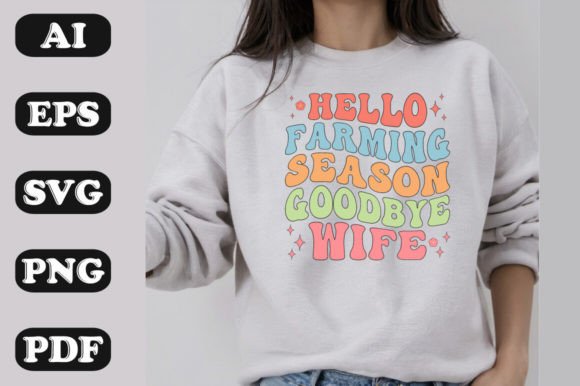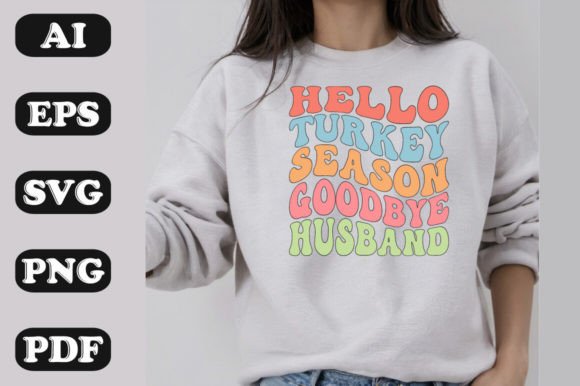
Hello Turkey Season Goodbye Husband
A Designer’s First Glance: Witty, Wavy, and Ready for Real Fabric
When Hello Turkey Season Goodbye Husband landed in my inbox, I paused—not because it’s complex, but because its energy is so immediate. It’s a wavy, playful script with clear seasonal humor and just enough attitude to land at a holiday party, a craft fair booth, or a small-batch Etsy listing. As an embroidery designer who’s stitched hundreds of text-based graphics, I don’t just scan for aesthetics—I ask: *Will this hold up under needle and thread? Will it read clearly at 3 inches wide on a sweatshirt? Will customers smile—or squint?*
Where This Design Naturally Lives (and Thrives)
I recently used Hello Turkey Season Goodbye Husband as the centerpiece for a custom embroidered tote bag—linen-cotton blend, medium weight, flat surface. The result? Crisp, legible, and full of personality. That’s where this design shines: on stable, non-stretchy fabrics with room to breathe. Think:
- Sweatshirt embroidery (especially front-chest placement)
- Tote bag design (centered on natural canvas or duck cloth)
- Aprons and tea towels (where wit meets function)
- Pillow covers and nursery decor (paired with simple turkey motifs or autumn foliage)
- Holiday gifts like personalized oven mitts or kitchen towels
It also works well as a standalone embroidered patch—clean curves translate nicely into satin stitch outlines, and the spacing between letters avoids overcrowding in fill areas.
What Happens When You Stitch It—Not Just Print It
Remember: this is a graphics file marketed for printing—but we’re treating it as a machine embroidery design candidate. That means every curve, every thin stroke, and every gap matters more than it does on screen.
The “wavy” quality gives it charm, but it also introduces subtle challenges. On curved surfaces—like caps or baby hats—the wave can distort if hooping isn’t precise or stabilizer isn’t layered thoughtfully. On textured fabrics (terry cloth, fleece-backed sweatshirts), fine letter details may soften unless stitch density is adjusted or a cutaway stabilizer is used.
I tested it on a lightweight cotton jersey tee using tear-away + light iron-on stabilizer. The result was readable but slightly softened—perfect for a relaxed, handmade vibe, less ideal if you need razor-sharp definition for boutique branding.
Where to Proceed With Care
Hello Turkey Season Goodbye Husband isn’t built for micro-embroidery. Avoid it on:
- Small hoop sizes (under 4" x 4") — the wave and letter spacing need breathing room
- Baby onesies (unless enlarged to 3.5"+ height and paired with ultra-soft stabilizer)
- Stretchy knits without proper backing — the wave can “pull” unevenly during stitching
- Dark fabric without high-contrast thread — light-colored script needs strong thread saturation to avoid fading into the background
- Layered garments (e.g., hoodies with thick hoods) — dense fill areas may require reduced stitch count or re-digitizing
Also note: the phrase leans into seasonal humor—so while it’s great for Thanksgiving merchandise or fall-themed craft fairs, it won’t carry year-round appeal like neutral botanical or monogram designs.
How It Shapes Perception—Of Your Product, Your Brand, and Your Craft
Customers don’t just buy text—they buy tone. Hello Turkey Season Goodbye Husband signals lighthearted confidence. It says, “I know my audience, and I’m not afraid to be playful.” That builds trust with buyers who value handmade personality over mass-produced polish.
But that tone only lands if execution matches intent. A poorly stabilized stitch on a dark hoodie makes the phrase look muddy—not cheeky. A too-tight hoop on a curved cap distorts the wave into something unrecognizable. So yes, it’s fun—but it demands attention to detail, especially for Etsy sellers or small shop owners building repeat business.
As a digital embroidery file, it adds warmth to your design assets library—not as a workhorse staple, but as a seasonal accent piece. Pair it with simple turkey applique designs or leaf motifs, and you’ve got a cohesive holiday collection.
Practical Notes Every Embroidery Designer Should Run Through
Before cutting fabric or loading your machine:
- Test first — stitch Hello Turkey Season Goodbye Husband on scrap fabric matching your final project’s weight and stretch.
- Check thread color contrast — especially on dark or heathered backgrounds. White or cream thread pops best on navy or charcoal; kraft brown works beautifully on natural linen.
- Review stitch density — if your version runs heavy, reduce fill density by 10–15% for breathable fabrics like cotton tees.
- Confirm hoop size compatibility — measure the design’s widest point before hooping. Don’t force it.
- Inspect small details — look closely at the tail of the “y” in “Turkey” and the curve of the “g” in “Goodbye.” Are they clean in your preview?
- Test black-and-white mockups — how does it read when stripped of color? Clarity > charm here.
- Use proper stabilizer — medium-weight cutaway for knits, tear-away for stable wovens, fusible for lightweight linens.
- Verify licensing — since this is sold as a T-Shirt Designs graphic, confirm whether commercial embroidery use (e.g., selling finished embroidered sweatshirts) is permitted before listing on Etsy or at craft fairs.
Final Thought: A Seasonal Spark, Not a Standalone Solution
Hello Turkey Season Goodbye Husband isn’t trying to be everything—it’s a focused, spirited addition to your embroidery project toolkit. It won’t replace your go-to monogram or classic script, but it *will* bring energy to your fall lineup, spark conversation at a boutique, and add authenticity to a handmade gift. Used thoughtfully—with respect for fabric, stabilizer, and customer expectation—it earns its place in real-world embroidery work. Just remember: wit stitches best when technique keeps pace.