Christmas Tree Cakes Most Likely to Eat Graphics & T-Shirt Designs
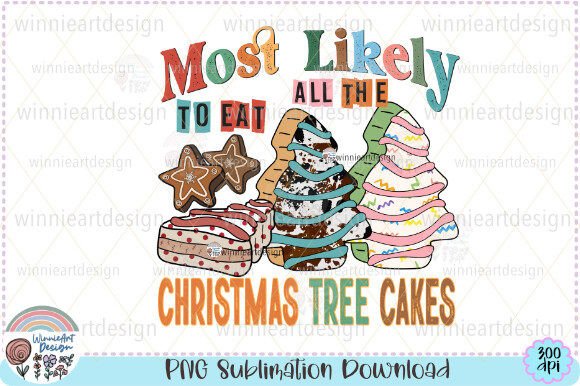
When a seasonal commercial project lands on my desk, I always start by hunting for design assets that carry a strong central idea while leaving space for the client’s brand to breathe. The Christmas Tree Cakes Most Likely To Eat digital file immediately grabbed my attention — not because it’s overtly trendy, but because it understands how to channel holiday nostalgia through a slightly cheeky, edible visual trope. This is not a standard candy cane or holly berry motif. Instead, it uses stacked cake forms shaped like evergreens, rendered with frosting swirls and sprinkles that feel tactile enough to belong on a bakery window decal or a limited-edition apparel drop.
From a design strategy perspective, this graphic design asset creates an atmosphere that bridges whimsical indulgence with handmade charm. The visual tone leans toward modern cottagecore-meets-comfort-food, which fits perfectly for brands that sell home-baked goods, artisanal confectionary, cozy lifestyle products, or even playful stationery. The mood is warm, a little humorous, and inherently celebratory without resorting to predictable red-and-green clichés. For the right client, it’s the kind of artwork that makes a product feel like a thoughtful treat rather than mass-produced merchandise.
A Quirky, Appetizing Asset for Seasonal Branding
One of my current clients runs a small-batch cookie decorating kit business on Etsy. She needed a hero graphic for a winter collection that felt distinct from the sea of snowflakes and reindeer. When I mockup-tested the Christmas Tree Cakes Most Likely To Eat design on a kraft paper label and a cotton apron, the result immediately elevated the concept. The illustration’s dense, 300 dpi PNG file at 4000 x 4000 pixels retained crisp edges and mouthwatering detail — the sugar pearl textures, the subtle shadowing between cake layers, and the soft pastel frosting colors all read cleanly even on textured backgrounds.
For a t-shirt design, the same graphic translated beautifully onto a heather grey unisex tee. Because the PNG file likely ships with a transparent background (from the product description, it’s a single PNG in a zip), I was able to isolate the artwork and experiment with overlay blending modes in Photoshop. It sat comfortably as a centerpiece chest print, and the oversized square canvas meant I had enough resolution to scale it up moderately or crop into a pocket-print variation without pixelation. The absence of an SVG file is something to note, but for apparel and most printable design uses, the raster quality is more than sufficient.
Where This Graphic Shines in Client Work
When evaluating a digital product like this, I always think in terms of “fit-first” design. The Christmas Tree Cakes Most Likely To Eat graphic thrives in contexts that celebrate abundance, warmth, and personality. I’ve used similar assets successfully for:
- Brand identity — as a secondary mark on hangtags, thank-you cards, and loyalty stamp cards for bakeries or dessert pop-ups.
- Packaging design — on clear cellophane bags for cookie mixes, cupcake boxes, or seasonal tea tin labels.
- T-shirt design — especially for limited-run drops around holiday markets, where buyers are drawn to food-themed graphic tees.
- Social media graphics — as a full-background hero image for Instagram posts, Pinterest pins, or Facebook cover photos that announce seasonal menus or flash sales.
- Canva templates — the high-resolution PNG allows non-designers to drop the asset into pre-built layouts for menu boards, flyers, or digital invitations without losing sharpness.
- Cricut projects — print-then-cut stickers, mug decals, or iron-on transfers for tote bags that work nicely at approximately 4–8 inches wide.
What I particularly appreciate is how flexibly the design merges with script fonts, slab serif type families, and even minimalist sans serif lockups. The organic silhouette of the cake stack creates a natural focal point that draws the eye downward, so pairing it with centered or right-aligned typography in a contrasting weight maintains visual hierarchy without extra effort.
When to Pull Back
In my experience, even the most charming graphic has limitations that deserve honest attention. The Christmas Tree Cakes Most Likely To Eat artwork is highly detailed, so I avoid shrinking it below 1.5 inches for print or using it as a tiny icon in website navigation. At extremely small sizes, the frosting details begin to muddy, and the playful personality gets lost. Similarly, because it’s a raster PNG and not an SVG design, you lose the ability to infinitely scale or edit individual color paths. That means it’s not the right asset for a client who demands fully editable vector shapes for a logo design or corporate identity system.
I’d also be cautious with low-contrast backgrounds. The pastel palette can wash out on pale blush, mint, or cream surfaces if you don’t adjust brightness or add a subtle drop shadow. When I tested it on a white ceramic mug, I ended up adding a very faint monochrome outline to preserve the silhouette. In minimal branding contexts — such as luxury skincare or high-end corporate holiday cards — the illustration may feel too whimsical. It leans best into campaigns that embrace human warmth, humor, and a sense of treat-yourself indulgence.
Testing and Format Considerations
Every time I evaluate a design asset for client use, I run through a mental checklist that covers technical, aesthetic, and legal grounds. Here’s exactly what I recommend with this particular digital file:
- Unzip and inspect immediately. The download is one zip containing one 4000 x 4000 pixel PNG at 300 dpi. On Mac or Windows, double-click to extract and confirm the image has a clean transparent background. If you need a layered file, you will have to rebuild it manually — this is not an SVG or PSD, so advanced editing is limited.
- Test across backgrounds. Place the PNG on dark, light, textured, and photographic backdrops. Check that the frosting whites don’t blend into light surfaces and that the darker sprinkle elements remain visible on deep colors. I often add a 2–3% black overlay layer behind the art for safety in printed materials.
- Scale test for intended uses. For a t-shirt design, print a digital mockup at actual chest dimensions. For sticker design, shrink to 3 inches wide and examine detail. For social media graphics, downscale to 1080 x 1080 pixels and ensure the cake silhouette remains recognizable at thumbnail size.
- Print a color test. Even at 300 dpi, RGB PNGs can shift when converted to CMYK for commercial printing. I always soft-proof in Adobe Photoshop or Illustrator to anticipate any saturation drop, especially in the candy pinks and mint greens.
- Check typography compatibility. Pair the graphic with a bold serif, a playful script, a clean sans serif, and a handwritten font to see which style matches your client’s voice. I’ve found that slightly rounded sans serif fonts (like Montserrat or Poppins) and flowing modern calligraphy scripts balance the illustration without competing.
- Confirm commercial license terms. Before using Christmas Tree Cakes Most Likely To Eat on products for resale — including print-on-demand, Etsy product listings, or physical merchandise — verify that the included license covers commercial design use. Some digital marketplaces restrict items to personal projects unless a separate commercial license is purchased, so always read the seller’s fine print.
Where It Fits in a Real Campaign
Let’s ground this in a realistic client brief. Imagine a local bakery launching a “Snacky Holiday” line of cake jars and hot chocolate bombs. They need a visual anchor that feels simultaneously nostalgic and Instagram-ready. The Christmas Tree Cakes Most Likely To Eat graphic becomes the hero on their 5x7 inch hang tags, a repeating pattern element on tissue paper, and the central motif on crewneck sweatshirts sold as merchandise. The 4000-pixel square dimension means I can use the same file across packaging design, digital ads, and t-shirt design without re-exporting at different quality levels. The consistency across touchpoints strengthens brand recall, and the playful edible illustration sparks exactly the kind of emotional engagement that drives word-of-mouth sharing during the holiday season.
For a blogger or content creator, this asset works equally well as a blog post header image, a recipe card illustration, or an e-book cover accent. The digital product’s clarity means it holds up even after being placed in Canva templates and resized multiple times. Creators who sell printable designs on Etsy can incorporate it into holiday wall art, gift tag sets, or printable cookie box templates — as long as the license allows for derivative digital products.
The Verdict for Professional Projects
After a thorough rounds of mockup testing, font pairing, and print sampling, I have to say that the Christmas Tree Cakes Most Likely To Eat graphic earns its place in my seasonal asset library. It’s not a one-size-fits-all solution, but for the right project — a handmade business, a whimsical small business branding campaign, a food blogger’s editorial design, a Cricut crafter’s sticker sheet, or a print-on-demand seller’s next hit design — it delivers a strong emotional punch with technical reliability. The lack of vector format is a minor tradeoff given the generous pixel dimensions and crisp rendering, but it’s something to keep in mind if you need to reshape or recolor elements extensively.
Ultimately, the value of any graphics or t-shirt designs asset lies in its ability to solve a creative problem efficiently. This one nails a very specific aesthetic: festive, slightly irreverent, and lovingly detailed. When my client sees the final mockup with their logo nestled beside that frosting-topped stack of cake trees, the smile is genuine. And that, in the real commercial world, is the most honest measure of a design’s success.